Brooke Sobh, MS, RD, LDN
A simple, realistic way to understand what you’re eating — without obsessing over food.
If you’ve ever heard someone say, “I’m tracking my macros,” and thought What does that even mean? — you’re not alone.
Macro counting can sound intimidating at first, but it’s really just a way to understand what your food is made of so you can better support your goals, whether that’s fat loss, muscle gain, more energy, or balanced eating.
The good news? You don’t have to be a math wizard or track every bite forever to benefit from it.
Let’s break down how to count macros in a simple, realistic way.
What Are “Macros”?
“Macros” is short for macronutrients — the three main nutrients your body needs in large amounts: Macros are the three main nutrients your body needs in large amounts: protein, carbohydrates, and fats. They provide energy and support muscle, hormones, and overall health.
Protein
Protein helps build and maintain muscle, supports your metabolism, and keeps you feeling full. Protein has 4 kcal/gram. You generally would want to try to shoot for 20-40g of protein per meal. This is great for blood sugar control and staying fuller, longer.
Examples:
- Chicken, fish, eggs
- Greek yogurt
- Lean meats
- Tofu, beans, lentils
Carbohydrates
Carbs are your body’s main energy source. They fuel your brain, workouts, and daily activities. Carbs have 4 kcal/gram.
Examples:
- Rice, pasta, bread
- Fruit
- Potatoes
- Oats
Carbs are not bad — they’re essential to our energy. The key is balance and quality.
Fats
Fats support hormones, brain health, and help you absorb vitamins. Fat has 9 kcal/gram, so while they are more calorically dense, they keep you fuller longer, so it’s important not to be scared of fat!
Examples:
- Avocado
- Nuts and seeds
- Olive oil
- Fatty fish like salmon
Healthy fats also help meals feel satisfying.
Why Do Macros Matter?
Macros matter because they directly affect hunger and fullness, energy levels, body composition (fat vs. muscle), workout performance, and hormone balance.
Two people can eat the same number of calories, but feel very different depending on how their macros are balanced.
For example:
A meal with protein, carbs, and fats will usually keep you full longer than a meal that’s mostly carbs. If you have a meal that is mostly carbs, you may feel quite hungry throughout the day.
Macro awareness helps you build meals that actually satisfy you — instead of leaving you hungry an hour later.
Do You Need to Count Macros to Be Healthy?
Not necessarily. You can absolutely eat well without tracking. But macro counting can be helpful if you feel stuck with fat loss, want to build muscle, are under-eating or over-eating without realizing it, like structure and data or want to learn what balanced eating looks like. Think of it as a learning tool, not a lifelong rule.
Many people track for a period of time, learn what works, then transition to eating more intuitively once they have an idea of what balance looks and feels like.
How Do Beginners Start Counting Macros?
Keep it simple. You don’t need to be perfect.
Step 1: Start with protein
The easiest first step is focusing on protein. A general guideline:
Try including a source of protein at each meal. This alone can improve fullness and support muscle.
💪 Related Article: High-Protein Prepared Meals: Support Your Goals with Fitlife Foods
Step 2: Build balanced meals
Aim for meals that include:
- A protein source
- A carb source
- A healthy fat
- Fruits or vegetables
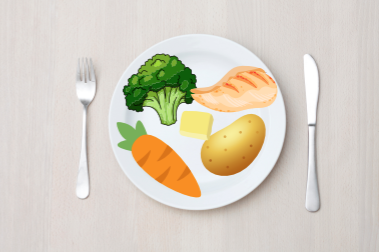
Example:
Grilled chicken + rice + veggies + olive oil
Balanced, satisfying, and macro-friendly. A good way to think about this is ½ of your plate will be vegetables, ¼ of the plate being carbs, ¼ of the plate being protein, and a tablespoon of fat.
Step 3: Use a tracking app (if you want structure)
Apps can help you learn how foods add up.
But remember:
Tracking is a tool — not a measure of your worth or success. By tracking, you will be able to see which foods consist of carbs, proteins, and fats.
Common Beginner Questions
“What if I go over my macros?”
Nothing bad happens. One meal doesn’t make or break progress. Focus on patterns, not perfection. It would also be wise to have a registered dietitian come up with set macros for you if you decide to track macros. Macros are not a one-size-fits-all approach.
“How many macros can I eat?“
The amount of calories and macros you are allotted depends on whether you are male or female, your height, weight, age, goals and activity level. It also depends on what you goal is! If you want to gain weight or muscle, you will need more calories and macros. If you want to lose weight, you will need less calories and macros. If you want to balance your hormones, we need to increase fat and protein. If you want to have more energy in the gym, we need to increase carbohydrates.
-If you would like to start counting macros TODAY, here is a basic calculation to find your macros:
-BMR:Women: (10 x weight in kg) + (6.25 x height in cm) – (5x age in years) – 161
-BMR: Men: (10 x weight in kg) + (6.25 x height in cm) – (5 x age in year) + 5
-Then multiply this by your activity factor:
- Sedentary (little/no exercise, desk job): BMR × 1.2
- Lightly Active (light exercise 1–3 days/week): BMR ×1.375
- Moderately Active (moderate exercise 3–5 days/week): BMR ×1.55
- Very Active (hard exercise 6–7 days/week): BMR ×1.725
- Extremely Active (physical job, training 2x/day): BMR × 1.9
Let’s say, for example, we have a 35 y/o woman who weight 120 lbs at 5’4 who is moderately active. She wants to lose 5 lbs, so we will decrease 500 calories from her TDEE.
BMR:Women: (10 x 54.5) + (6.25 x 162.56) – (5x 35) – 161= 1575 kcal x 1.55= 2441 calories/day
Since she is trying to lose weight, we will decrease 500 calories from this total, so she should shoot for 1941 kcal daily.
We will aim for 30% of calories coming from protein, 40% from carbs, and 30% from fat. 1941 x .30 =582 kcal from protein/4 kcal per gram= 145 g protein
1941 x .40=776 kcal from carbs/4 kcal per gram=194 g carbs 1941 x .30= 582 kcal from fat/9 kcal per gram= 64 g fat
So total macros: 145 g protein, 194 g carbs, 64 g fat.
“Do I have to track forever?”
No. Many people track temporarily to learn, then move to a more intuitive approach.
“Is this basically dieting?”
Not necessarily. Learning how to count macros can be used for fat loss, but it can also support maintenance, muscle gain, or simply balanced nutrition.
How Prepared Meals Can Make Macro Tracking Easier
One of the biggest struggles beginners face is the math and measuring when it comes to counting macros.
Cooking from scratch can make it hard to know exact portions or macro breakdowns. You would have to weigh all ingredients going into each recipe.
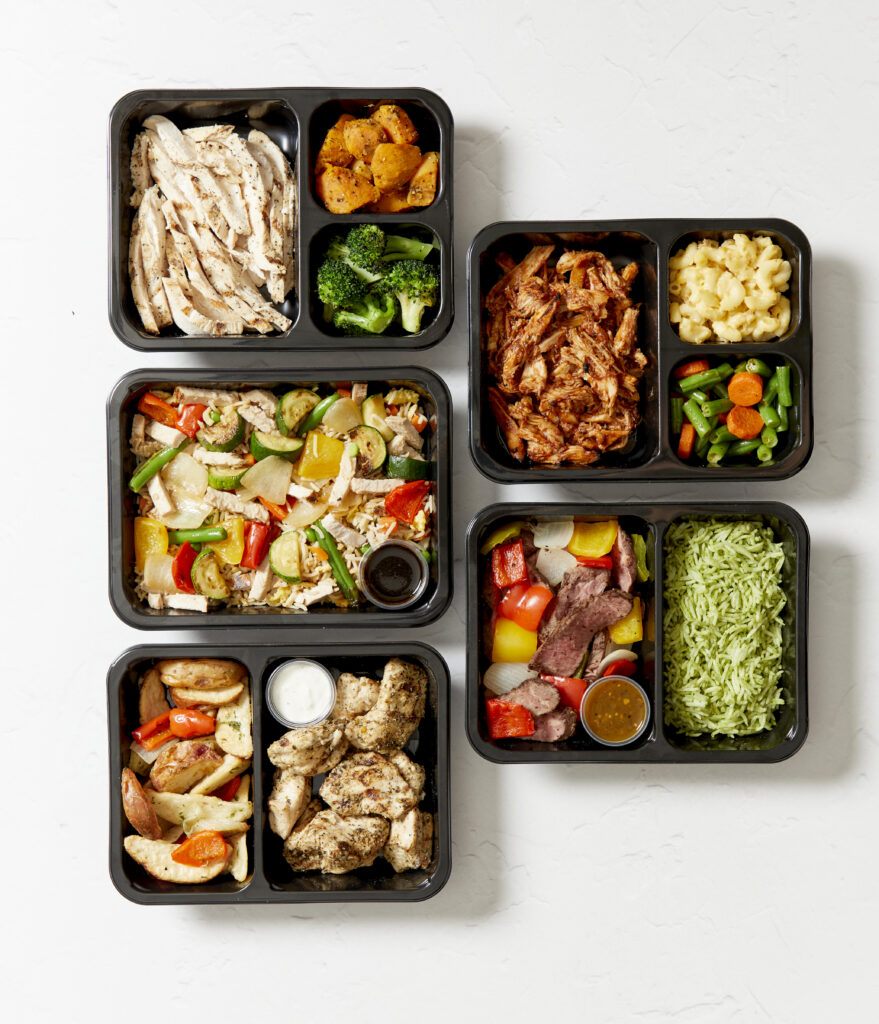
That’s where prepared meals, like Fitlife Foods, can be a game-changer. When meals are already portioned and labeled with protein, carbs, and fats, it:
- Saves time
- Removes guesswork
- Reduces stress
- Helps you stay consistent
For busy people, this can be the difference between knowing what to do and actually doing it.
Prepared meals make macro awareness realistic for real life — not just for fitness competitors or people with lots of free time.
The Bottom Line
Macro counting isn’t about restriction or obsessing over numbers.
It’s about understanding your food so you can fuel your body with confidence. Start small.
Focus on balance.
Give yourself grace.
Healthy eating doesn’t have to be complicated — and it definitely doesn’t have to be perfect.
An easy way to start would be tracking your food intake in a tracking app to get familiar with what you are currently doing, so you have an idea of where you can start. And if you need a dietitian to help you, I know a girl! 🙂

Brooke Sobh is a Registered and Licensed dietitian in Florida with over 13 years of experience. She owns a 1:1 Coaching business and works with men and women to help them increase their metabolism, feel the best they’ve ever felt, and fuel their bodies properly through proper nutrition and lifestyle habits.
References:
Academy of Nutrition and Dietetics. Portion Control for Weight Loss.
https://www.eatright.org/health/weight-loss/behavior-change/portion-control-for-weight-loss
Burke, L. E., et al. (2011). Self-monitoring in weight loss: A systematic review. Journal of the American Dietetic Association.
https://pubmed.ncbi.nlm.nih.gov/22786986/
Harvard T.H. Chan School of Public Health. The Nutrition Source — Carbohydrates.
https://www.hsph.harvard.edu/nutritionsource/carbohydrates/
Harvard T.H. Chan School of Public Health. The Nutrition Source — Fats.
https://www.hsph.harvard.edu/nutritionsource/what-should-you-eat/fats/
Harvard T.H. Chan School of Public Health. Healthy Eating Plate.
https://www.hsph.harvard.edu/nutritionsource/healthy-eating-plate/
Leidy, H. J., et al. (2015). The role of protein in weight loss and maintenance. Journal of the Academy of Nutrition and Dietetics.
USDA MyPlate. Protein Foods.
https://www.myplate.gov/eat-healthy/protein-foods